
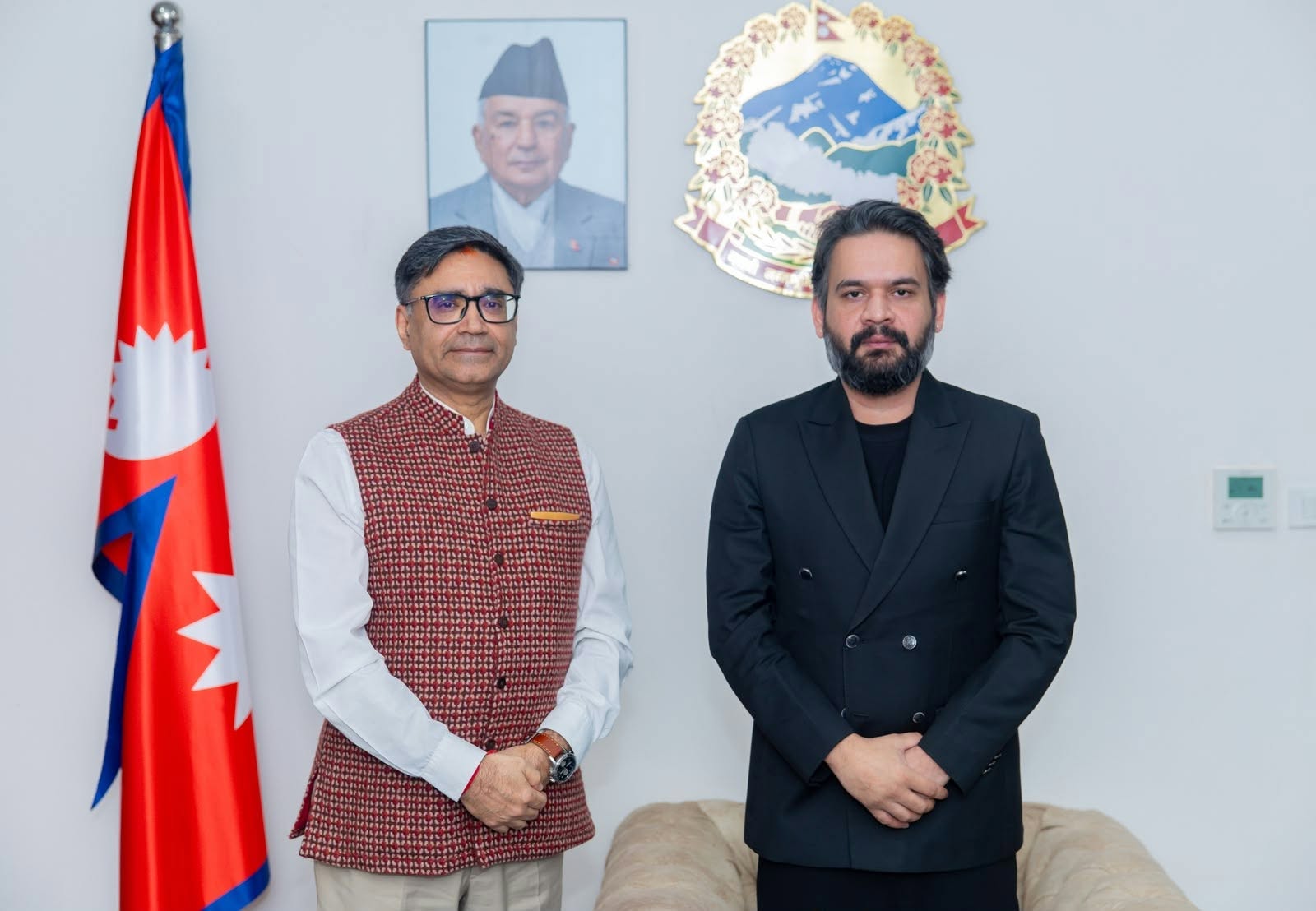
PM Balen Shah’s India Visit: $2B Aid Package, INR Loans, and Strategic Infrastructure Demands
As Prime Minister Balen Shah prepares for his highly anticipated official visit to India—slated for November 23–25—the Government of Nepal has finalized an ambitious and assertive diplomatic agenda. Centered around a $2 billion economic assistance framework, the proposed initiatives seek to address long-standing structural bottlenecks in trade, energy, connectivity, and aviation.
Following intensive pre-visit consultations, highlighted by Indian Foreign Secretary Vikram Mishra’s high-level meetings in Kathmandu, Nepal’s economic and foreign policy teams have placed several game-changing propositions on the negotiating table.
1. The $2 Billion Aid and the Push for INR-Denominated Loans
Nepal’s financial blueprint requests an even split between grants and concessional loans:
- Grants ($1 Billion): Allocated toward constructing the proposed Butwal–Pokhara Expressway ($500 million) and rehabilitating infrastructure ravaged by devastating monsoon floods earlier this year.
- Concessional Loans ($1 Billion): Targeted at large-scale hydroelectric projects and high-voltage transmission lines.
In a major departure from traditional borrowing norms, Nepal has formally requested that these concessional loans be denominated in Indian Rupees (INR) rather than US Dollars.
Economic analysts in Kathmandu view this as a vital safeguard against foreign exchange volatility. Because the Nepali Rupee is pegged to the Indian Rupee (100 INR = 160 NPR), borrowing in US Dollars exposes the national treasury to severe depreciation risks. As historical data proves, a shifting USD-NPR exchange rate can suddenly inflate debt servicing liabilities by tens of billions of rupees. Shifting to INR-denominated loans stabilizes long-term fiscal planning and aligns borrowing costs with cross-border procurement realities.
2. Strategic Connectivity: Butwal-Pokhara Expressway and Rail Expansion
The proposed Butwal–Pokhara Expressway stands as a cornerstone of the bilateral economic package. With an estimated total cost of $750 million—$500 million of which is sought as a direct Indian grant—the highway aims to cut travel time from the southern border to Pokhara to just two hours.
Beyond reducing transit friction, the expressway is designed to catalyze religious and cultural tourism, seamlessly connecting Indian pilgrims traveling via Lumbini to Pokhara and onward to Muktinath.
In parallel, rail diplomacy is reaching new milestones. Following a successful technical trial run featuring a 17-coach Indian train arriving directly in Janakpur from Ayodhya, discussions are advancing to operationalize regular cross-border passenger services. Subsequent phases propose extending rail lines from Janakpur to Bardibas and Nijgadh, alongside a Raxaul-Birgunj-Pathalaiya-Nijgadh freight corridor.
3. Breaking the Aviation Deadlock: Western Air Routes
For years, the multi-million-dollar international airports in Bhairahawa (SIA) and Pokhara (PIA) have struggled to attract regular international carriers due to a persistent aviation constraint: the lack of western entry air routes.
Currently, virtually all international flights entering Nepal must utilize the congested Simra airspace point, forcing aircraft arriving from the west to execute circuitous, fuel-inefficient flight paths.
Prime Minister Shah’s delegation is pressing New Delhi to grant direct western entry points via Mahendranagar and Nepalgunj. Resolving this long-standing bottleneck is deemed essential to making regional international airports commercially viable.
4. Energy Pipelines, Trade Concessions, and Institutional Branches
The bilateral dossier extends across multiple sectors:
- Petroleum & Gas Pipelines: Expanding existing infrastructure by proposing a new LPG (cooking gas) pipeline from Motihari to Sarlahi, alongside refined product pipeline extensions to Bhandara (Chitwan) and Jhapa.
- Trade Treaty Review: Pre-empting the 2030 renewal of the 2009 Bilateral Trade Treaty to eliminate non-tariff barriers, quarantine inspection delays, and customs hurdles affecting Nepali tea, plywood, and manufactured goods.
- Expanded Port Access: Requesting access to deep-water ports in Gujarat and Odisha to diversify international shipping options beyond Kolkata, Haldia, and Visakhapatnam.
- Educational & Technological Collaboration: Inviting premier Indian technical institutions—such as the Indian Institutes of Technology (IIT) and Indian Institutes of Management (IIM)—to establish fully-fledged branch campuses in Nepal, alongside cooperative frameworks for regional AI language modeling.
As diplomatic channels work overtime to finalize the joint communique ahead of November 23, the success of Prime Minister Balen Shah’s visit will be measured by whether New Delhi translates regional goodwill into concrete, legally binding commitments on structural economic parity.